Warning: Constant FS_CHMOD_DIR already defined in /home/digitalw/rhetoricofgaming.digitalwcu.org/WeeklyWriting/wp-config.php on line 101
Warning: Constant FS_CHMOD_FILE already defined in /home/digitalw/rhetoricofgaming.digitalwcu.org/WeeklyWriting/wp-config.php on line 101 October 2017 – Weekly Writing for Rhetoric of Gaming F2017
Rhetorically speaking, literature has long since employed the tactic of foreshadowing, an action that has translated just as excellently into cinema, wherein foreshadowing can be even the smallest aspect of a sequence that still holds importance. The recent release of Stranger Things highly anticipated second season highlights aforementioned mechanism for a second time around, wherein an everyday game play later on becomes an obvious foreshadowing item. In the first season the infamous Dungeons and Dragons acts as the catalyzing impetus and final answer for the seasons big questions, and season two has kept that construct alive with a video game rather than a board one. Without dropping any spoilers, there exists a less obvious connection within this season’s prophetic game play and its predecessor arc, but that doesn’t lessen its inevitable impact. Therefore, as both tactics work wonderfully, are games therefore a potentially potent literary and rhetorical mechanism within foreshadowing? (on top of everything else games culture can do)
Topic Proposal, containing a topic, a working thesis, and at least one primary (game object) and secondary source shared via the weekly blogs, no later than 1159 9/29 (5%) YES
Presentation of topic proposal, in class 10/3 (5 %) YES
Defense of topic proposal in conference with me no later than 10/3 (5%)YES
A draft project overview with a thesis and and no fewer than 200 words, shared on our weekly blogs no later than 10/6 (5%) YES
Commenting on two other writing projects via the blogs, on or before 10/8 (5%); YES
A draft conference with me, on or before 10/6 (5%) YES
Another draft conference with me, showing a substantially finished draft of the project, on or before 10/13 (5%); YES
A near-final draft, shared/linked from a post on our shared blog, on or before 10/13 (5%); YES
A final round of commenting on two drafts, due on or before 10/14 (5%); YES
While it may seem that Dungeons and Dragons is a simple role-playing game, it actually argues that one’s success in life is not reliant on how well equipped someone is for a situation, but rather how they are able to find solutions to a situation with what they already have.
The definite aspect of dice rolling in the game, while it does leave certain aspects of a situation up to chance, it never guarantees that a player is going to have a situation play out in a definitive way until the Dungeon Master says whether or not the roll was successful. With this in mind, players must continuously take into account the role of uncertainty with the decisions that are made.
The only real certainty that a player has is in their ability to make new decisions after seeing the success of their first decision. This aspect of the game appeals to cynical players who are willing to scrutinize every decision that they make, understanding that all things in life are uncertain. It is almost as if the game argues that every situation in life has a different type of kairos to it that is unknown until the situation plays out in its entirety.
Dungeons and Dragons is the single most definitive game in the realm of role playing that first came out in 1974. The game is played by having players select characters who navigate through various situations that are contrived by the Dungeon Master, who officiates play. Players roll dice of various sizes–d4’s, d6’s, d8’s, d10’s, d12’s, d20’s, and d100’s–in order to make certain things happen.
The part of Dungeons and Dragons that separates it from other games is the amount of freedom and experimentation that the game allows for, especially in character creation. Not only can players select their character’s race and class, but also they are able to customize their personalities as well as their weaknesses. Unlike many role playing games, Dungeons and Dragons does not only rely on fighting and customization of your character’s gear in order to submerge players in game play; the only limit to play is the player’s imagination.
Super Mario Odyssey is the latest installment of the long-running Super Mario series of games. The game has been well received, noting it’s adherence to classic Mario themes while breaking new ground for the series. In particular, the environments are more complex and featuring scenery not unlike New York City. This may have been a conscious choice, as the improved engine allowed by the improved hardware of the Nintendo Switch allows for more immersive environment with more moving parts. Interestingly, as one Polygon article notes, the gameplay does not very often “punish” the player. There are no lives that would result in a game over, and the player only loses a minimal amount of coins. This was an interesting choice, as one could imagine it being less satisfying to win when you never could fail. However, the article argues that the reward value is not lost with the addition of this no-punishment system. You very well may have to attempt a puzzle over and over, but you will not be too harshly punished for your failure, only set back slightly. The triumph is still there, but the player is not discouraged from play.
After reading Montola’s argumentation on pervasive games, I’ve been doing a lot of thinking about games that expand past the point of having a particular time, place, etc. for their play. Many of such games have become known to us so recently, because they use mobile phones as their platform of play, and many pre-existing games have developed mobile versions to follow this craze, as well. Old School RuneScape, for example, is about to release a mobile version this winter, which will allow players to use all of OSRS’s features anytime, anywhere. And this focus on mobile phones, devices that have become essential to and inseparable from everyday life, has sparked my interest in some of the other applications on our phones – staple applications that necessitate the use of smart phones.
Facebook is arguably the world’s most popular role-playing game. It lets the player create an avatar that looks just like themselves, and it lets the player use that avatar to navigate the game’s complex web of social situations. The way the player conducts their avatar’s behavior in these interactions inevitably comes with the reward of social acceptance and appraisal or the punishment of social rejection and disapproval. To improve or maintain their avatar’s dignity and fame on Facebook (or any social media), the player must make posts that they hope other players will enjoy and support. The posts don’t necessarily have to coordinate with the player’s real life either; even if the player’s current life experience is a negative one, the player’s avatar can purport to be having positive experiences. And, with Facebook’s integral role on our phones, the game never ends – the game is carried with us everywhere.
Red Orchestra 2: Heroes of Stalingrad. Tripwire Interactive. 2011. Video Games.
RO2 is a WWII first person shooter set during the battle of Stalingrad. The game features 64-player team matches that pit the Nazis against the Soviets. In the interest of balance and fairness, there are some limitations on what the player can do from match to match; both teams must have a similar amount of human players, so sometimes the team the player is on is forced, and the number of players allowed to use a specific weapon is limited. Most players will be restriced to bolt action rifles (Mosin Nagants or Kar-98’s, usually), while a few might end up being outfitted with sub machine guns, semi-auto rifles, or machine guns. The game also features a command structure for the players; there is a commander who is able to call in artillery strikes and direct troops, and squad leaders capable of issueing command and marking locations for artillery.
Anderson, Craig A, et al. “Supplemental Material for Violent Video Game Effects on Aggression, Empathy, and Prosocial Behavior in Eastern and Western Countries: A Meta-Analytic Review.” Psychological Bulletin, vol. 136, Mar. 2010, pp. 151–173., doi:10.1037/a0018251.supp.
This meta-study reconsiders the idea that exposure to violent video games makes one more prone to aggressive behavior. The analysis of the studies exposes a lack of cohesive information confirming this, and uses restrictive measures to identify the relevant information. The document also features a cross-cultural examination, which is missing from many other studies. This feature reveals slight differences in the effects of video games on the participants depending on factors such as age.
Lisi, Brian. “Rescue the chimp, become the robot: A look at Michael Jackson’s insane arcade game ‘Moonwalker’ as we remember the late King of Pop on his birthday.” New York Daily News, 29 Aug. 2016. Accessed 29 Oct. 2017.
The weirdest game I have every played was Michael Jackson’s Moonwalker. I played it in an arcade with by boyfriend and his brother. We each played as a one of three Michael Jacksons. The game consists of Michael Jackson using magical powers to kill a bunch of agents and rescue kidnapped children. There is a special attack in the game called “Dance Magic”. When that move is implemented all the Michael Jacksons start dancing as a heavenly spotlight shines on them. All of the enemies in the vicinity join into the dance and are destroyed because they ca not keep up with Jackson’s dance moves. Bubbles the chimpanzee is also in the game. Once bubbles is recued Jackson turns into a laser wielding robot. We spent an embarrassingly long time playing this game, because it was almost impossible to be killed. The part of the game that I found to be most fun was constantly hitting the Dance Magic button because my boyfriend hated losing control of his character and having to watch Michael Jackson dance to Smooth Criminal for thirty seconds. I don’t know who thought of this game or why but I want to find out what other games he created.
Candy Crush can be an addictive game. It is a puzzle game, with each level setting a different objective. The player is not supposed to clear the entire board, but is, instead, prompted to crush certain blocks of candy or eliminate certain ingredients. With over 2,000 levels, this game has essentially unlimited game-play. It is different than most games because there is not a clear end-goal; you just keep beating levels and playing on to the next level. Consequently, there has never been anyone that has “won” Candy Crush. This game proves an important point that games are still enjoyable even if they do not have a clear end result.
This article discusses the widely popular and controversial recent release of Cuphead, which revives old -timey aesthetics and difficulty levels. The game have received nearly universal acclaim, its intensely hard skill level aside, and this text investigates the game in its whole. Talking about the beautiful artistic designs and highly creative avatars and levels created, the article goes into great length about the beauty of the game, but undercuts such flowery language with the repeated promise of the game’s extremely difficult nature. This arduous aspect of Cuphead especially came into media conversation when multiple game reviewers gave insufficient reviews of the game due to their “obvious” inability to actually be a “gamer.” Many youtubers have also mocked this summation of the game being too difficult, and this piece too denotes that one’s inability to deal with the mechanics of a sound game shouldn’t be seriously considered.
Robbins, M. Brandon. “Puzzle It out.” Library Journal, vol. 141, no. 7, 15 Apr. 2016, p. 60. EBSCOhost, proxy-wcupa.klnpa.org/login?url=http://search.ebscohost.com/login.aspx?direct=true&db=a9h&AN=114555334&site=ehost-live&scope=site.
In this article, M. Brandon Robbins writes about the evolution of puzzle games all the way from classics like Tetris to newer indie puzzle games like The Talos Principle. He talks about a newer puzzle game that hides it puzzle genre under the disguise of a first person shooter. Superhot is a level-based game where the player must shoot their way through different areas to move on to the next level. The player can slow down time amongst other video-game-esque mechanics but this time-slowing effect helps to figure out the puzzle aspect of the game. The player must identify patterns and manipulate elements within the shooting to maneuver through the levels. Robbins also cites the story to be a puzzle in a way. Players must piece the entire story together through clues and cryptic messages along the progression of the story. He says the game entices players that primarily stick to a first person shooter type game to go out of their comfort zone and take up a more puzzle based game while sticking to some of the mechanics they are used to.
The Banner Saga is a wonderfully illustrated, story-driven strategy game that asks the player to lead a caravan full of warriors, giants, merchants, citizens, and loved ones across the harsh, Nordic tundra. In a fashion somewhat similar to games such as The Oregon Trail (yet with more complexity and modernity), the player must make important decisions constantly along their journey, from the allotment of resources required for survival, to the inclusion or exclusion of new travelers found on the road, and everything in between. The characters are rich, and so is the combat, which runs on a party, grid, and turn-based system that usually pits the players’ warriors against the evil Dredge (a robotic race of killers). And, during this whole process, every move that the player decides to make with their caravan, both in and out of combat, very much affects what will happen next, as well as at the end of the game.
This week I’m going to talk about one of my favorite games, Verdun. The game is a WWI first person shooter with a heavy emphasis on trench warfare and (near) realism. Gameplay centers around capturing the enemy teams trenches; whichever team has advanced the most wins. Since the game centers around capturing and holding territory rather than killing as much of the enemy as possible, teamwork is absolutely essential to victory. Players won’t accomplish much if they aren’t working in coordination with their teammates; a team must cover all parts of the trench in order to successfully defend it, must outnumber the enemy in their trench to take it, must coordinate gas and artillery strikes to where it would be most effective for the team.
Other than the game objective, the main element of the game that encourages teamwork is the squad-based organization of teams. When the player joins the game, they are put into a four-person squad that represents a specific military unit. Each squad has four different roles that are meant to fill specific functions. For example, the U.S. Army unit, the “Doughboys” (as they were called in the war), consists of an NCO, a sniper, a machine gunner, and a grenadier. Each is meant to accomplish something that the others can’t (the NCO calls in artillery while the machine gunner provides cover fire, or the sniper picks off enemy machine guns while the grenadier lobs grenades around corners to clear out enemies). While a player could try to go it alone, working with the other members of their squad is their best bet for overall victory.
Earlier in the semester, I did a rhetorical analysis of the Battlefield 1 trailer. I thought it would be interesting to do an analysis of the actual game.
Battlefield 1 is a high-intensity game, meant to be extremely realistic. The graphics are so good, it makes you feel like you’re actually within the game. Since the graphics are so realistic, there are times when playing gets a little unnerving. Because you can have an array of weapons, like knives, axes, etc., when you attack someone with these weapons, it looks like you’re actually attacking them. In the same way, if you get attacked, the screen spins around and simulates an actual attack. The music that plays in the background is also very ominous, fueling feelings of uneasiness and panic. Battlefield 1 seeks to simulate the same emotions that you would feel when watching an action movie, except now you’re playing a part in that movie. In the future, I think games such as this can develop, using virtual reality technology, to simulate emotions similar to those felt in actual combat situations. Games like that, then, could be used to potentially emotionally prepare soldiers for combat situations.
This week, Alexa, Emily, and I will be leading a discussion on emotions and gaming. We will be looking at how games are able to manipulate players into feeling certain emotions. One genre that does this is horror games. They are able to use different aspects of play in the game to make the player feel anxiety and fear. One horror game that does this is the PS4 game Until Dawn. In until dawn the player controls a handful of different character in a snow cabin who are being hunter by monsters. The game creates anxiety and fear in the player a few ways. One way is that the game implements jump scares so the player is always waiting for things to pop out at random and scare them. Another way they game designers create anxiety is by requiring players to quickly hit button on the controller. This will usually happen when a character is being chased by a monster. The player will have a few seconds to hit a series of control buttons or else their character will die. This creates anxiety in the player because they are always waiting for this to happen and are pressured to quickly hit the correct buttons. They also use sound effects to their advantage in the same way that horror film do, in that the music will get faster the closer you get to a jumpscare.
Resident Evil’s Rhetoric: The Communication of Corruption in Survival Horror Video Games by Charley Reed http://journals.sagepub.com/doi/pdf/10.1177/1555412015575363
This article thoroughly analyzes the effectiveness of Resident Evil’s infliction of terror upon the gamer. I’ve always known Resident Evil to be a horror game but I found new aspects in this article that I’ve never though of. What the article does best is just that, it goes past the normal factors of a horror game and analyzes the small and minute details that add to the terror that most gamers would even notice. The fact that the author notes the process of finding information through physical objects shows the real interest and investigation this author dealt with to complete this article. Citing something I would have never thought of gives the impression that the author really delved into the substance of their knowledge and the corresponding game. Writing about the idea of corruption in the game also gives the author credibility. Anyone can note that the surroundings in the Resident Evil games are creepy because they are dark, mysterious, and just all around creepy. This author goes in depth about the corruption of nature, architecture, and relating characters that cause the overall feeling of terror. The depth of their discussions establishes the authors credibility and gives the impression that the author really wants to investigate the game deeply.
Zoe Quinn. Depressionquest: An Interactive (Non)Fiction About Living with Depression. www.depressionquest.com
This game is not like most games played by teens or adults. Depressionquest is type of simulation game that gives people the opportunity to understand how the mind of someone with depression works. While going through the game, some ‘choices’ are crossed out in red and not clickable, but the player can still read what is there. Although the player may want to choose what is crossed out because they do not have depression in real life, the game makes the player realize that it is not even an option for a person suffering from depression. This aspect of the game helps the player better understand the thought processes of someone with depression and how this disease affects their way of thinking.
When watching gaming videos on YouTube, it can sometimes become clear that much of the YouTuber’s in-game choices are almost entirely based on the intention to pander to their audience, rather than based on their own personal will. For example, this has become the case in Torvesta’s (a RuneScape YouTuber and Twitch streamer) Dead-Man Mode videos recently. At the end of the attached video, he asks his viewers to give the video a like if they want to see him PK (player-kill) with an Amulet of Fury (expensive, rare item) in the next video.
This sort of behavior consequently predicates the whole reason for the following video on the wishes of Torvesta’s audience. Torvesta, if the conditions of his request for likes are true, is driven by forces outside of the game (money, fame-based gratification, etc. from likes) when he plays for his videos. Therefore, Torvesta (or any other gaming YouTuber who does this) is not truly engaged in play in such cases, at least according to Huizanga’s notion of play. On the other hand, if Torvesta does play for his own in-game purposes and desires, fulfilling his request for likes is a futile action.
The Binding of Isaac is a dungeoneering shooter that pits the player against a series of encounters with numerous enemies and bosses that attempt to overwhelm and thrill. Isaac, the game’s main character, is tortured by his evil mother, who has locked him in the basement. From here, the player must play as Isaac in order to fight their way through a psychological hellscape of nightmarish creatures (all with some kind of sadistic and creepily biblical reference built into them) in order to make it out of the basement to fight and defeat “Mom”: a collection of monstrous limbs that try to kill Isaac. Along the way, the player earns random power-ups for their avatar that increase stats, allow unique abilities (active or passive), etc. Each completion of the game unlocks new items/power-ups, bosses, and levels (including Heaven and Hell).
Graham, Joseph M. “Narrative Therapy for Treating Video Game Addiction.” SpringerLink, International Journal of Mental Health and Addiction, 14 Dec. 2014, www.bing.com/cr?IG=90066C71A5D441F2BFBA954E1528228C&CID=263BE62205F86EE42C56ED0604FE6F82&rd=1&h=uKv8-uhk-K99oIn9EKVDBGGxDJfwC–DzlSOZDvCynM&v=1&r=https%3a%2f%2fwww.ncbi.nlm.nih.gov%2fnlmcatalog%3fterm%3d1557-1874%255BISSN%255D&p=DevEx,5063.1.
This article addresses video game addiction and treatment. It notes that video game addiction is defined similarly to gambling addiction, although emphasizes that certain skills translate online and offline. What is interesting is the emphasis the article puts on mental health professionals not to dismiss video games as having value. This is an interesting departure from the popular view that video games are time wasters, but this idea may be fading. The article suggests narrative therapy as a way to recover from video game addiction, which is a type of therapy in which the patient identifies their value and skills to help externalize the problem.
Juuls, Jesper. “A clash between game and narrative.” A clash between game and narrative, www.jesperjuul.net/thesis/.
This essay by Jesper Juuls attempts to explore the idea of narrative within game as a form of interactivity, and whether or not games that are narrative-driven, such as interactive fiction, can be constituted as games. While not specifically tied to any works, Juuls’ piece helps to set the foundation for the general concept of a game and the concept of interactivity as a form of play. For this reason, I choose to include it as further cement on the foundation that is our collective definition of the game and of play.
Resident Evil’s Rhetoric: The Communication of Corruption in Survival Horror Video Games by Charley Reed http://journals.sagepub.com/doi/pdf/10.1177/1555412015575363
Charley Reed investigates and dissects what really makes a horror video game incite a sense of dread and terror in his article Resident Evil’s Rhetoric: The Communication of Corruption in Survival Horror Video Games. Using different rhetoric theories and ideals, he delves into the different aspects and mechanisms of the game franchise that really add to the sense of dread and terror when a player invests themselves in the game. One characteristic that adds to a player’s sense of terror is how the aspects of play and story break our preconceived notions about behavior and life. Things are scarier to players when they don’t adhere to normal life, leaving the player out of control of the story and unable to expect what comes next. Another interesting point Reed pointed out is that in Resident Evil games, backstory and expositional information is normally found within non-digital objects. Players find information through books, paintings, pictures, or tape recordings found throughout the game. This grounds the game for the player making the aspect of finding information feel real. Finding information in a digital fashion like through computers in a digital outlet like an Xbox feels less real than finding physical information in a digital outlet.
Sioni, Sasha R., et al. “Internet Gaming Disorder: Social Phobia and Identifying with Your Virtual Self.” Computers in Human Behavior, vol. 71, June 2017, pp. 11-15. EBSCOhost, doi:10.1016/j.chb.2017.01.044.
Role playing games allow for users to entertain and socialize. However, some users have become dependent on these games leading the psychological and health problems. These individuals have been diagnosed with a disorder known as Internet Gaming Disorder. This studies observes risk factors mainly social phobia and player-avatar identification. They found that people who are uncomfortable and anxious in face to face conversations use role playing games as a way to form relationships with other individuals. They also use avatars as a way to create a unique self-identity for the players. They found that people who have social phobias and player avatar identification are strong factors associated with individuals with Internet Gaming Disorder.
Jolley, Kristie. “Video Games to Reading: Reaching out to Reluctant Readers.” The English Journal, vol. 97, no. 4, 2008, pp. 81–86. JSTOR, JSTOR, www.jstor.org/stable/30047252.
This article examines the role that video games have in helping students with learning difficulties become better readers. Jolley claims that there is a connection between the gaming habits and schoolwork of an individual(81). Using James Paul Gee’s approach to learning and literacy and how he realizes the importance of recognizing games as teachable texts, Jolley surveyed 250 eight-grade students in her school about their reading and gaming habits. This empirical research concluded that students who love video games but struggle to read are more excited to read game-based books. These books (such as novels based off of the Halo video game), actually have authority and power within the reading classroom. She also explains that teachers can reach out to the students who are more game-based by having them read graphic novels. What Jolley concludes is that the role of video games can have an impact on literacy of an individual if that role is catered to appropriately within the school environment.
In this portion of Bogost’s article, he attempts to explain procedurality in video games as the necessary constraints that define a game’s parameters, as well as its limitations. The concept of process intensity, understood as how a procedural game utilizes process over data, comes with the notion of meaningful expression, and defines a game as a form of artistic expression, rather than a tool like a spreadsheet or word document. What I fail to notice, however, the ways that procedurality impact the player and the player’s interaction with the game. The concept presented here only seems pertinent to the game itself, and the relationship between game and player falls to the wayside. If we are to understand the act of play as a meaningful interaction between gamer and game, then we can’t talk about the processes that make up the game without talking about this critical relationship. Regardless, Bogost’s idea of procedurality as the separation from tool and game is both plausible and accurate, in my opinion.
Nancy Drew: The Ghost of Thornton Hall already has your ethos established from the start: you’re Nancy Drew…acclaimed teenage detective. The rest of the game prompts you to live up to that ethos through critical thinking, problem-solving, and keen observation skills. By assuming the role of Nancy Drew from the start, the ultimate goal is to find out who is haunting Thornton Hall and find the missing bride-to-be. The game needs you to be active and productive at all times; every puzzle, conversation, and in-game text serves a purpose. The best way to solve the mystery is to take note of everything. When I first started playing this gaming series when I was in elementary school, I would create sheets of notes. Anything I saw I wrote down because I needed to remember it all. This helped me beat the earlier games. As I got more well-versed in these games, I relied less and less on my note-taking and more on my learned abilities and experiences from previous game play. These games prompted me to be more observant, showing me the importance of observation skills.
Topic Proposal, containing a topic, a working thesis, and at least one primary (game object) and secondary source shared via the weekly blogs, no later than 1159 9/29 (5%)
Presentation of topic proposal, in class 10/3 (5 %)
Defense of topic proposal in conference with me no later than 10/3 (5%)
A draft project overview with a thesis and and no fewer than 200 words, shared on our weekly blogs no later than 10/6 (5%)
Commenting on two other writing projects via the blogs, on or before 10/8 (5%);
A draft conference with me, on or before 10/6 (5%)
Another draft conference with me, showing a substantially finished draft of the project, on or before 10/13 (5%);
A near-final draft, shared/linked from a post on our shared blog, on or before 10/13 (2.5%) (it was a near-near-final draft)
A final round of commenting on two drafts, due on or before 10/14 (5%)
Topic Proposal, containing a topic, a working thesis, and at least one primary (game object) and secondary source shared via the weekly blogs, no later than 1159 9/29 (5%)
Presentation of topic proposal, in class 10/3 (5 %)
Defense of topic proposal in conference with me no later than 10/3 (5%)
A draft project overview with a thesis and and no fewer than 200 words, shared on our weekly blogs no later than 10/6 (5%)
Commenting on two other writing projects via the blogs, on or before 10/8 (5%);
A draft conference with me, on or before 10/6 (5%)
Another draft conference with me, showing a substantially finished draft of the project, on or before 10/13 (5%);
A near-final draft, shared/linked from a post on our shared blog, on or before 10/13 (5%);
A final round of commenting on two drafts, due on or before 10/14 (5%);
Topic Proposal, containing a topic, a working thesis, and at least one primary (game object) and secondary source shared via the weekly blogs, no later than 1159 9/29 (5%) YES
Presentation of topic proposal, in class 10/3 (5 %) YES
Defense of topic proposal in conference with me no later than 10/3 (5%) YES
A draft project overview with a thesis and and no fewer than 200 words, shared on our weekly blogs no later than 10/6 (5%) YES
Commenting on two other writing projects via the blogs, on or before 10/8 (5%); YES (commented on Elliot and Domenico’s projects)
A draft conference with me, on or before 10/6 (5%) YES
Another draft conference with me, showing a substantially finished draft of the project, on or before 10/13 (5%); YES
A near-final draft, shared/linked from a post on our shared blog, on or before 10/13 (5%); YES
A final round of commenting on two drafts, due on or before 10/14 (5%); YES (commented on James & Alexa’s projects)
Topic Proposal, containing a topic, a working thesis, and at least one primary (game object) and secondary source shared via the weekly blogs, no later than 1159 9/29 (5%) – 5%
Presentation of topic proposal, in class 10/3 (5 %) – 5%
Defense of topic proposal in conference with me no later than 10/3 (5%) – 5%
A draft project overview with a thesis and and no fewer than 200 words, shared on our weekly blogs no later than 10/6 (5%) – 5%
Commenting on two other writing projects via the blogs, on or before 10/8 (5%); – 5%
A draft conference with me, on or before 10/6 (5%) – 5%
Another draft conference with me, showing a substantially finished draft of the project, on or before 10/13 (5%); – 5%
A near-final draft, shared/linked from a post on our shared blog, on or before 10/13 (5%); – 5%
A final round of commenting on two drafts, due on or before 10/14 (5%); – 5%
Lin, Yu-Ling, and Lin, Hong-Wen. “A Study on the Goal Value for Massively Multiplayer Online Role-playing Games Players.” Computers in Human Behavior6 (2011): 2153-160. Web.
This study contains participants who enjoy playing MMORPG’s. It analyzes what they value about these types of online gaming the most, and how these aspects benefit the gaming world economically. Most of the participants gain fulfillment out of the social interaction aspect of MMORPG’s. They enjoy creating relationships through the gaming community and benefit from them immensely. This also causes players to want to spend more time playing a specified MMORPG, because they look forward to talking with their online friends, and escaping from the real world and people they necessarily can’t connect with throughout their day in the real world.
Tetris is probably one of the most-played games ever, but it is crucial in the development of visual and technological literacies. Tetris can be played across a variety of technologies including computers, phones, gaming consoles, arcade devices. It is essentially a timed puzzle game, prompting the player to make choices in how to they want the falling pieces to fit into place. In this way, it prompts the player to make quick decisions; there is not a lot of time to think. This teaches the player how to visually assess the empty spaces and fill them accordingly, thus teaching visual literacy.
Sioni, Sasha R., et al. “Internet Gaming Disorder: Social Phobia and Identifying with Your Virtual Self.” Computers in Human Behavior, vol. 71, June 2017, pp. 11-15. EBSCOhost, doi:10.1016/j.chb.2017.01.044.
Role playing games allow for users to entertain and socialize. However, some users have become dependent on these games leading the psychological and health problems. These individuals have been diagnosed with a disorder known as Internet Gaming Disorder. This studies observes risk factors mainly social phobia and player-avatar identification. They found that people who are uncomfortable and anxious in face to face conversations use role playing games as a way to form relationships with other individuals. They also use avatars as a way to create a unique self-identity for the players. They found that people who have social phobias and player avatar identification are strong factors associated with individuals with Internet Gaming Disorder.
Houghton, David. “P.T. is still the purest horror game around, and one of the smartest on PS4.” Gamesradar, Future PLC, 31 Oct. 2016, www.gamesradar.com/why-pt-first-real-horror-game-years-and-best-game-ps4/.
As detailed within this piece, PT exists now as one of the most infamous and well received horror games of all time, and has been consistently praised as such from its release. Acting as playable trailer (PT) for an up and coming game (that has since been canceled), this short gameplay lives on in continuous fame. PT does what most horror media forgets to do by keeping to the basics. Its scares and progressively antagonistic atmosphere are pure aspects of the genre, but its artistic direction also positively affects the play. Clear and concise, this horror game knew what it wanted to be, and most likely would’ve been a fantastic full length piece, However, though it is a short excursion, compared to the lengthy hours some games, especially horror games, can take, this isn’t detrimental to this work. In fact, the level of intensity and often left-unfinished-gameplay of this piece denotes its successful delivery, and speaks to the modern gaming industry as to quality overriding quantity. It’s a fraction of a normal game’s length, but far exceeds most other gameplays.
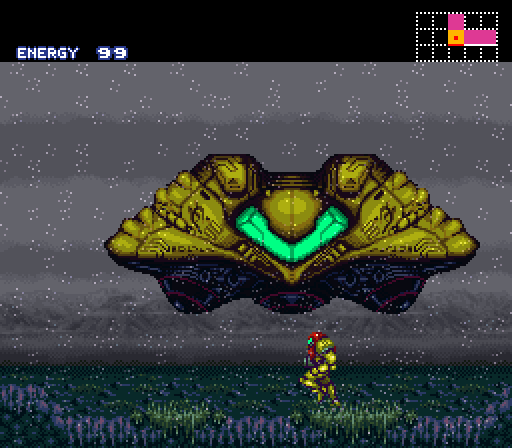
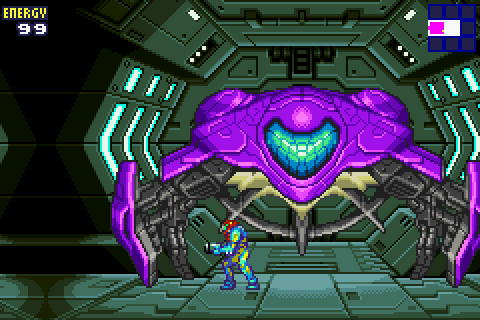
At first glance, each of the original Metroid titles tell the same story. Bounty hunter Samus Aran is contracted by the Galactic Federation to investigate an alien threat. Isolated in an alien world, she fights for survival as she explores seemingly endless interconnected labyrinths. Obviously, these are not the same games, but why? The answer, as I will explore, comes from how the game allows the player to play. Though each of the games looks nearly identical–even the 8-bit NES version draws from the same inspiration—and the formula untouched, each game feels different.
(Perhaps analyze the visual and audio differences here)
When it comes to analyzing the rhetoric of games, one must explore beyond the visual, auditory, and textual aspects of the medium. Video games are unique in that they convey themselves to the player through the act of play. As Bogost points out, the imagined systems the player inhabits are explored procedurally “by imposing sets of rules that create particular possibility spaces for play”. In a sense, the freedom of play is defined and facilitated by the rules and restrictions that create the play space. Understanding games as a system of rules is what Jasper Juul––and many other game scholars––calls a formal system. This formal system is the structure that game developers create, and it serves as the bones for gameplay. But, the formal system is essentially a dead space until it is interacted with by the player.
But what exactly is the space of play? According to Huzinga, “The space of possibility of a game is a plane stretched between two anchorage points: the beginning and the end of the game….In a well-designed game that supports meaningful play, this journey between points should be taut and efficient, with every element contributing directly or indirectly to the larger experience” (chapter 20 p9). Super Metroid drops the player into its world, and with almost no direction, and free range to explore. Through procedural play, the player can become quickly assimilated with the games rules and figure out a general idea of where to go through hints from the formal system of the game. Meaningful play arises from exploring unknown territory, finding insurmountable obstacles, continued exploring, finding items, and returning with the items to progress. At its core Super Metroid is an adventure game, not unlike it’s predecessor Adventure for the Atari 2600. (Insert picture of Adventure).
Horror is a tone aspired for in each title, but the way it is conveyed varies. In Understanding Video Games as Emotional Experiences, Aki Jarvinen Identifies the ways in which game systems ellicit emotions from the player. This is in part because the outcome of play is unknown to the player, creating tension.
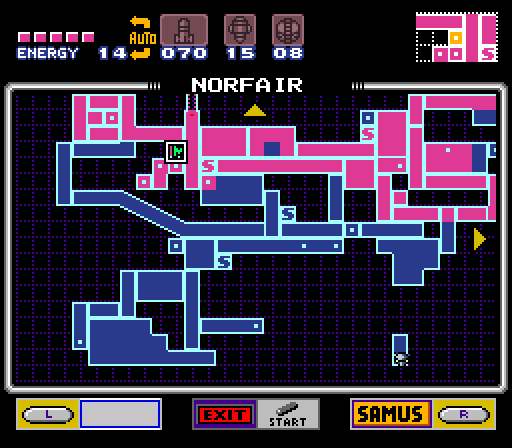
Super Metroid Norfair map
For Super Metroid, this tension comes largely from exploring unknown territory. With no direction, the player must make their way through the game on their own. This sense of being lost creates feelings of isolation and confusion.
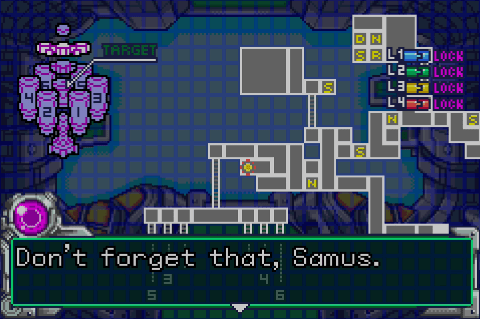
Metroid Fusion hub world map
Fusion is much more linear though. The level design is much easier to navigate and your progress is facilitated by waypoints on the map and a narrative largely told to you by a computer that briefs you on your missions. This “on rails” gameplay removes the suspense created from getting lost in exploration, but allows for new emotions to be elicited. As stated earlier, the parameters of a play space define the experience of playing.
Since its inception in 1999, the NBA 2K gaming franchise has grown to be one of the highest selling sports games in the world. With millions of copies being bought every year with the annual release, NBA 2K has evolved from the simple competitive play of battling it out on the hardwood against your friends, to being able to play online against someone on the other side of the world in real life time. One of the most distinct feature which has risen to prominence in the 2K gaming franchise, would be the addition of the career mode, which gives the player of the video game the ability to create their own avatar and follow the path to become an NBA legend. With this distinct feature, comes a unique situation that can be examined when looking at a type of play that allows a player to make an avatar that looks like how the player conceives them selves, acts and/or plays like how they may play the real-life version of basketball, and enter into a computer generated game which follows along a fictionalized storyline inside the constructs of the NBA lifestyle and basketball gaming aspects such as practicing and playing in a NBA game against the digitalized versions of real-life NBA stars. What I look to examine, would be this type of play I’ve described and how the player of this type of play interacts with their avatar, making them better in certain basketball attributes and/or customizing them to how they would see them selves if they were in the role of an NBA star and how these two types of style of play differentiate from one another in a rhetorical standpoint.
When first starting the game, the user is asked to design an avatar of there own and customize the looks of their basketball player within the realm of options of height, weight, skin tone and physique. The player may also go through the steps of changing how the face looks by sculpting different aspects of facial features such as the cheek, nose, ears, eyes, and mold them how the user sees fit to them. Then, the user is able to choose from different styles of hair and facial hair along with different colors for the hair choices. The user is able to then pick and choose different accessories and clothing items for their avatar to wear during gameplay on the court and within the realm of the story mode. Though the basis of the customization is required when beginning the game and the story mode, many players can be found within the realm of the online story mode that have gone beyond the basics of the clothing and accessories you begin with and bought, using the NBA 2K currency, clothing and accessories that further customize the look of the avatar. When examine this aspect of the game, it becomes evident that though not all users customize a close to life like representation of them selves with their avatar, many decisions regarding customization are made on the personal connection between user and avatar that result on the user gaining a positive feeling from the ability to make a character that represents ones self.
In the same aspect of spending virtual cash to purchase the aesthetics of the users personalized avatar, the players of the game may use the same currency to boost the actual basketball playing aspects of the character. When looking at this side of the myCareer mode of the game, the player is first started off with several options that lay the ground work to the particular playing style of your avatar and how they will exceed in the actual gaming aspect of the game; whether that be either following the story mode or playing online with fellow users of the game in a street ball style of play, the user can explore different options of playing styles at the traditional basketball positions and/or cross the boundaries of the various hybrids of positions that can be seen in todays NBA players. When progressing through the various game modes, the user will accumulate the currency that 2K gives to its users and can use it for a variety of measures. With regards to the use of this currency to the ability to better the users avatar in the basketball skills aspect, the user may pick and choose what skills they feel are needed to be improved on to raise their character to the status of all-time great.
Having worlds of computer problems today, so my site is currently a mess. Fingers crossed that I can figure this crap out so I’m not scrambling for Monday.
I remember my first console: Playstation 2. I remember my first favorite game: Sly Cooper and the Thievius Raccoonus. I remember the first game that I ever played online with friends: Call of Duty: World at War. I also remember the first Xbox controller I broke from throwing it on the ground in rage. I was quickly lectured by my very angry father but I can wholeheartedly say that I have learned from my situation and never broken a controller since. Besides learning the value of a $60 controller, from all of my gaming experience I have learned so much from playing video games contrary to my father’s belief.
Games have taught me cognitive skills ever since I could hold a controller. I’ve learned about problem-solving, spatial awareness, and motivation more from playing games like Sly Cooper for an hour than playing baseball for a decade. I still learn new things from games now. It may seem like I’m just playing a game but after reflecting on the gameplay I had just experienced, games are much deeper than I perceive. Games like Assassin’s Creed have taught me about history and culture, Hellblade: Senua’s Sacrifice has taught me about mental illness, and games like Minecraft have taught me about creativity. With the new advancements in the video game world, games should be as complex as their operating systems and most of the time, they are.
“Using sources from class, talk about what makes a game then transition into my game analyses.”
The game franchise that has since blown up continually teaches players about history and culture in a way that any high school history teacher cannot. Assassin’s Creed follows the Assassin Brotherhood as it evolves through different eras and locations. The first installment followed the third Crusade in Jerusalem, the second followed the Renaissance in Italy, the third followed the colonization of America, and so on and so on. The best thing about this franchise is the way it follows history and also creates their own history. This teaches the player about the history revolving around the setting of the game while also creating a quasi-fictional world and story to draw the player in. Kurt Squire quotes a fellow writer Loewen in his book, Video Games and Learning: Teaching and Participatory Culture in the Digital Age, “Loewen begins his book “Lies My Teacher Told Me with ‘High school students hate history. When they list their favorite subjects, history invariably comes in last….Bor-r-ring is the adjective they commonly apply to it’(p.12)” (111). History lessons need a reboot and I can entirely relate with these surveyed children.
History has always helped put into a good mid-school nap. But once I came across the wonders of Assassin’s Creed II, I fell into a historical hole regarding Leonardo Da Vinci. Your source of technological and weapon advancements in the game revolves around Leonardo Da Vinci. Ask any person about Good ol’ Leo and they’ll immediately respond with something about his paintings. Leo’s character in AC2 doesn’t even reference his paintings because, what many people do not know about him is that he was also a master inventor. Leo actually sketched what is believed to be the first helicopter, he invented the parachute, and he invented the giant crossbow. All of this learning was inspired from my first mission where I meet Leo and he crafts my hidden assassin blade, something a boring, hour-long history lecture couldn’t have done for me.
Kurt Squire also writes about using Civilization 3 as a teaching outlet for kids. He found the children learned about the resources or certain advances of the respective regions in Civ3 without knowing it and then Squire and the teachers capitalized on those lessons by furthering their new-found knowledge. One kid said, “Location is important. Playing in America was easier”. To which Squire explained the player acknowledged the importance of scientific discovery and how America’s role in scientific discoveries helped their play in the game. Other players liked playing in Egypt because of their surplus of gold where the teachers then taught the players about the importance of the Nile River and the Egyptian and their reliance on gold. When reflecting on his tests, Squire explains, “We tried many teaching approaches, but found the most success when teaching and learning activities were in direct response to game play challenges” (138). So when these teachers combined a lesson with the game, it helped solidify all of the information those children learned through playing this video game.