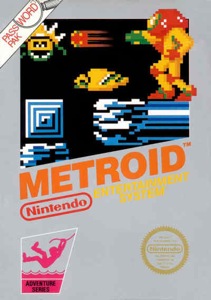
Metroid
(NES 1986)
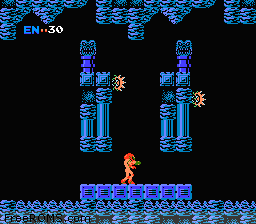
Metroid provided one of the first highly nonlinear game experiences on a home console. The basic gameplay is a mix of action adventure and platform shooter. The player begins with a very limited amount of power-ups, but must always use their ingenuity to achieve the next “locked” or unreachable area
Learn more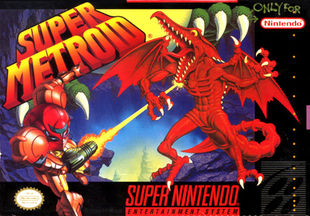
Super Metroid
(SNES 1994)
Super Metroid is a 2D platform video game with action and adventure elements. Game progression revolves around gathering Power-ups that allow Samus Aran to overcome obstacles in order to access new parts of the world. Like most 2D Metroid games, the world has a non-linear design and features many hidden areas, making exploration a central concept of the game
Learn more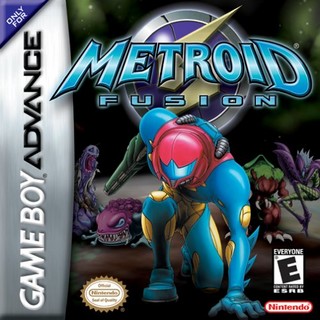
Metroid Fusion
(GBA 2002)
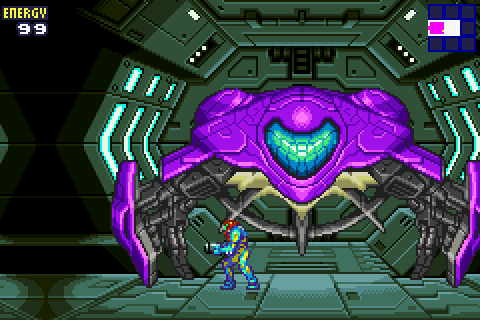
It is the fourth game (last chronologically) made for the Metroid series. It is a sidescroller shooter, Samus can absorb x parasites which will restore health, bomb, and missiles. Metroid Fusion tends to be more linear and story-driven than previous entries, cutting off sections of the space station for certain parts of the story.
Learn MoreIntroduction
At first glance, each of the original titles tell the same story. Bounty hunter Samus Aran is contracted by the Galactic Federation to investigate an alien threat. Isolated in an alien world, she fights for survival as she explores seemingly endless interconnected labyrinths. Obviously, these are not the same games, but why? The answer, as I will explore, comes from how the game allows the player to play. These different play spaces ellicit different emotions from the player as they play. Though each of the games looks nearly identical–even the 8-bit NES version draws from the same inspiration–and the formula untouched, each game feels different.
Games: a space of play
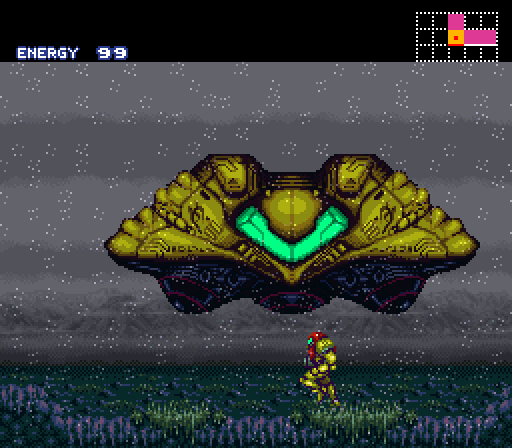
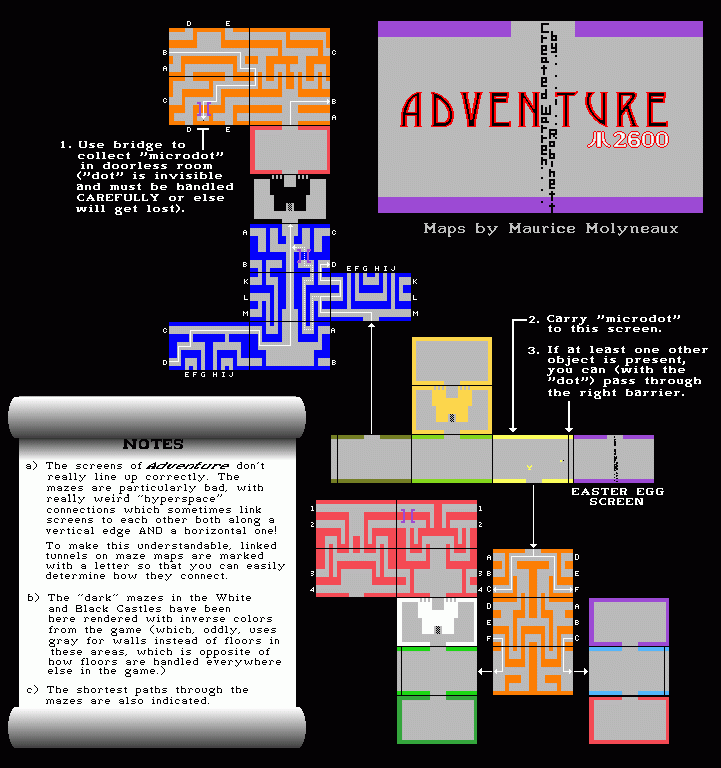
Though I realize that the space of play is more than just a literal ‘space’, I’m representing play space here as the maps of the game because they are incredibly important to the experience of an adventure game.
At the center of every game is a goal. Without one, game play falls apart. The goal of play is mediated between the game and the player. Whether the goal is to beat the game, gather every collectable, or just to have fun, a game that does not allow for fluid and purposeful movement through its possibility space is doomed to fail. Thats not to say that reaching a goal should be easy or low effort. A well crafted formal game system should be tense, balancing player confusion with in game guidance that isn’t too patronizing. For an adventure game this is incredibly important because one of the most important goals is exploration
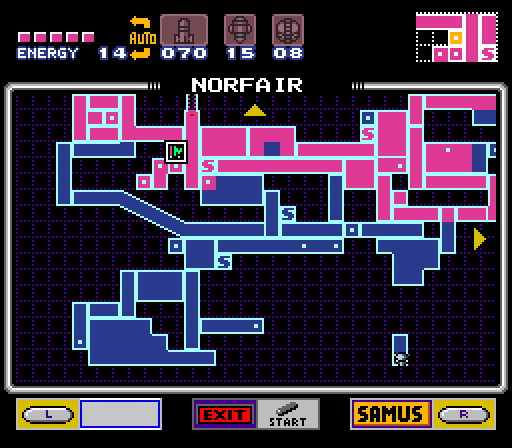
Super MEtroid
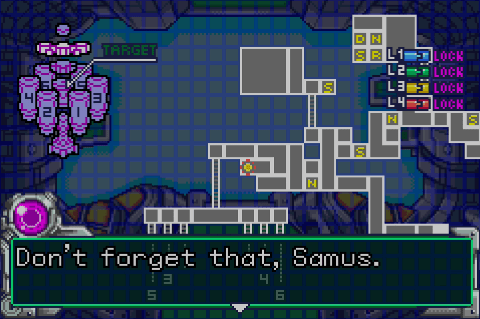
MEtroid Fusion
Procedurality
When it comes to analyzing the rhetoric of games, one must explore beyond the visual, auditory, and textual aspects of the medium. Video games are unique in that they convey themselves to the player through the act of play. As Bogost points out, the imagined systems the player inhabits are explored procedurally “by imposing sets of rules that create particular possibility spaces for play”. In a sense, the freedom of play is defined and facilitated by the rules and restrictions that create the play space. Understanding games as a system of rules is what Jasper Juul––and many other game scholars––calls a formal system. This formal system is the structure that game developers create, and it serves as the bones for gameplay. But, the formal system is essentially a dead space until it is interacted with by the player.
Bogost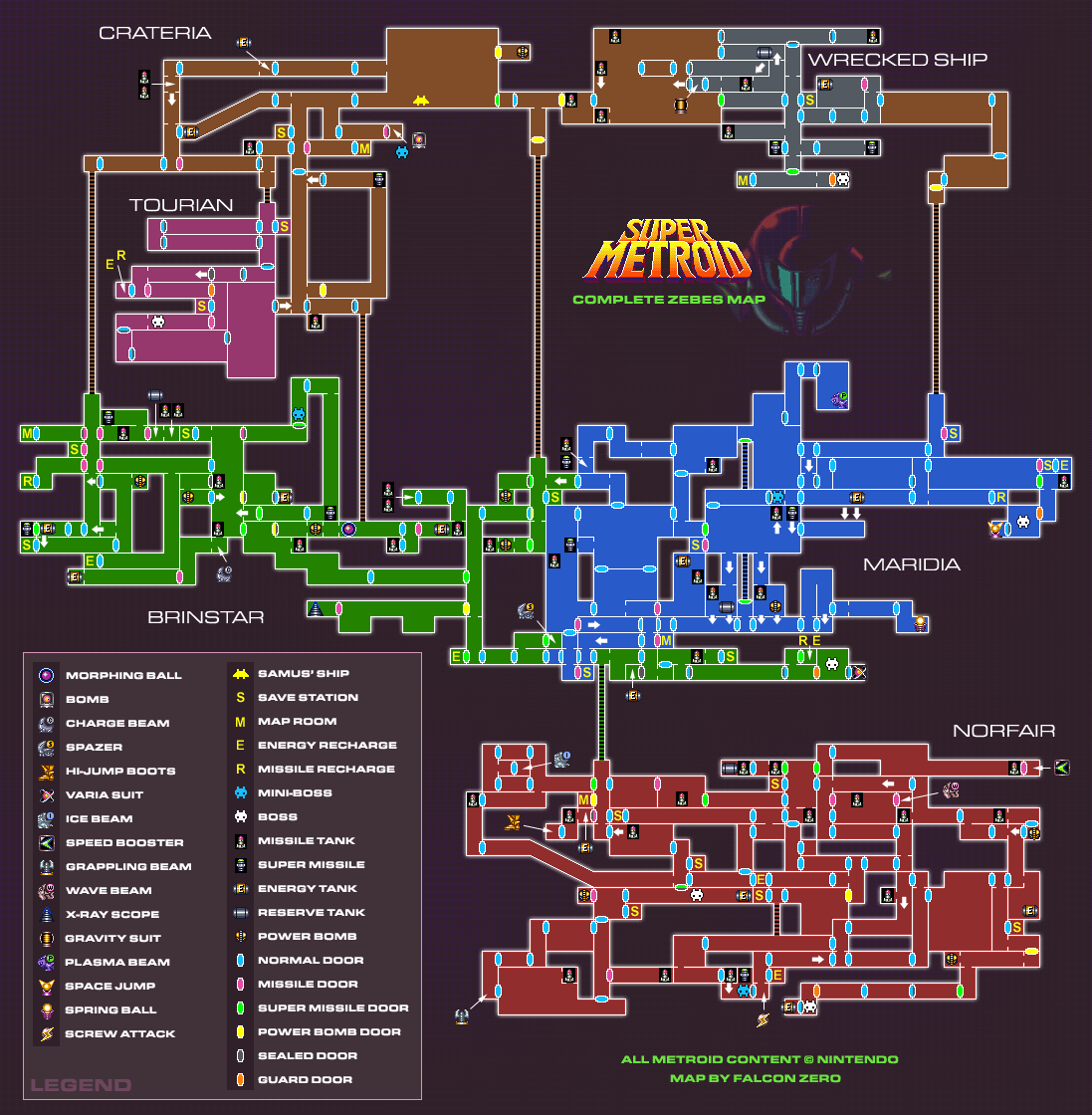
Play Elliciting Emotion
Possibility and Agency
In Understanding Video Games as Emotional
Experiences, Aki Jarvinen Identifies the ways in which game systems elicit
emotions from the player. This is in part because the outcome of play is
unknown to the player, creating tension. Events arise for the player, and a
response is necessary. Jarvinen asserts that gameplay activates an emotional
response that can be conceptualized as a series of phases:
1) appraisal –
the recognition of an event as significant.
2) context evaluation –
thoughts or plans to react to the event
3) action readiness –
one’s willingness to respond with another action
4) physiological change –
the bodily and expressive effects of emotion
Through the embodiment that the space of play allows, these
same phases can provide a framework in understanding the experience of tension
video games play. Jarviven differentiates two kinds of behavior, one
governed by the system and the other governed by the player. For the purposes
of my analysis I will identify the former as the possibility space and the
latter as the player’s agency. The interplay of player agency and the
possibility space creates a tension that drives the player forward through the
“taught” experience described by Zimmerman.
Tension in each game
Metroid pioneered the 2-D, side-scrolling adventure game. Unlike other platformers on the Nintendo Entertainment System (NES), Metroid rejected a linear level design–the likes of Super Mario Brothers–in favor of an open world design. Each of the worlds were separate, but connected in a maze of hidden passageways. Each new room presented a twofold challenge: how to clear the room and where to go next. I have not included a picture of Metroid’s map because there is no map accessible in game.
Super Metroid built off of the same design idea, creating an even more vast world with even more secrets to uncover, but was nice enough to give the player a map. Even still, developers purposefully inhibited the player’s spatial awareness by only allowing areas you have already visited to be seen. The only exception being map data rooms, which would load the main areas of the world, if you were lucky enough to find them.
This tension comes largely from exploring unknown territory. With no direction, the player must make their way through the game on their own. The formal system in an adventure game is crafted to create
uncertainty in the correct path to the player’s goal, which for our purposes
can be called progression through exploration. This uncertainty caused by the lack of a clear path is the main source of
tension for these two games. The player must recognize the significant events the formal system creates (maybe small hints or clues), interpret an appropriate response within the possibility space (possible paths to pursue), act accordingly (taking the risk of agency), and experiencing the subsequent emotion from correct action or not. Here the emotion experienced depends on whether the player made the right choice. Either they feel the relief of discovering their goal (a new item, boss room, or map data room), or become increasingly more anxious and fearful as they become more and more lost within the maze.
Fusion is much more linear though. The level design is much easier to navigate and your progress is facilitated by waypoints on the map and a narrative largely told to you by a computer that briefs you on your missions. This “on rails” gameplay removes the suspense created from getting lost in exploration, but allows for new emotions to be elicited. As stated earlier, the parameters of a play space define the experience of playing. Here, the uncertainty of the game dimishes slightly. Players may not know what lies beyond the door they are about to enter, but orientation is almost never uncertain.
Many have said that it is this breakaway from the established Metroid formula that makes Fusion a strict action game. In the next section I will argue that horror is a tone that is explored much more deeply within the constraints of linear gameplay.
Action-Adventure-Horror
Exploration
The horror genre had a significant influence on since its inception. The work of H.R. Giger for the film had a major influence on the game’s art style, as well as an influence on many of the space marine tropes that run through story. Horror is a tone aspired for in each title, but the way it is conveyed varies. As I introduced in the previous sections, the experience game play gives a player is dependent on the formal structure of the game, as well as the agency exercised during the act of play. Since, complex embodied emotions can be exploited, it would seem then that a game is the perfect place to elicit fear. In his analysis of survival horror games, such as , Ewen Kirkland, identifies the uncanny as inextricably tied with horror. Horror in this sense is normalcy that threatens something more sinister underneath. For the spatial or environmental, the uncanny is concerned with “orientation” (2). Quoting Freud, “the uncanny would always, as it were, be something one does not know one’s way about in” (2). In this way Kirkland asserts that a game’s architecture, “mazes of rooms and corridors filled with traps, dead ends and locked doors”, is key in eliciting the fear response associated with survival horror (2). The more spatially aware one becomes, the more certain they are in their goal, and thus their well-being as a character. This is what survival horror games actively try to avoid, by having the player explore the uncanny environment confused and uncertain.
This is exactly where Super Metroid loses its element of horror. The fear of the unknown is only present during the initial stages of area exploration, wherein phasic emotional processing takes place. Once you have the entire area mapped out, progress depends on backtracking through areas the play has already visited. The feeling of uncertainty is gone and the player has nothing to fear. The intricate mazes suddenly become less mysterious and interesting, and more of an annoying hassle to navigate.
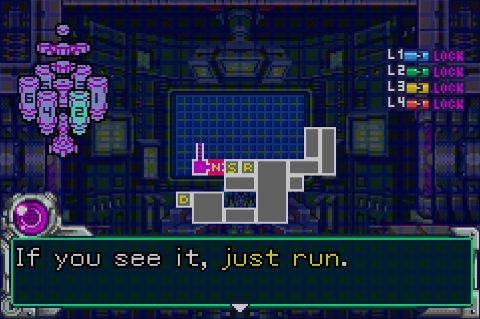
SA-X Encounters:
SA-X (1) SA-X (2)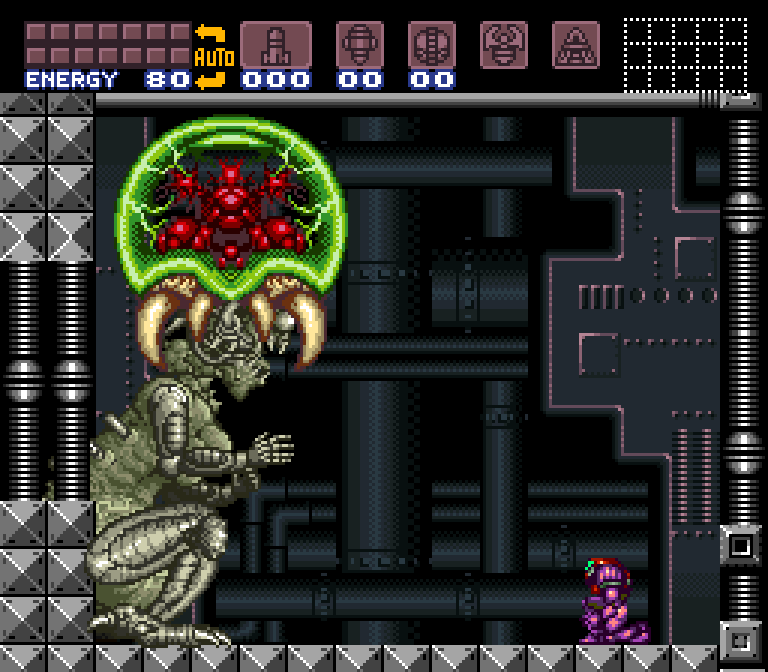

The Uncanny in Agency and Powerlessness
Interested in agency as it relates to fear in gameplay, Kyle
E. Madsen conducted research investigating the role of agency in eliciting emotional
response in players. He compared the physiological responses of agent players
and passive observers and determined that players ellicit a stronger fear
response, possibly due to avatar identification allowing for an experience
similar to ‘real life’ (Madsen 1). This would seem to be contradictory to the
idea that restricting player agency could be a method of eliciting fear, but
research did not account for variable agency. What the research does reveal
though is that playing does elicit emotional response in players. His research found this to be most true in first person perspective games, so it is even more impressive that the Metroid series has found ways to evoke fear on a 2d plane.
Video games are unique because they covey meaning to the player through the act of play. The player embodies their in-game avatar and exercises agency within the possibility space. Because of this, horror can be conveyed through the environment of the play space. What’s more, games also have non-playable characters which the player can interact with, which are designed to appear to have their own agency. Kirkland also explores the horror that developers can convey through these characters, saying that animation juxtaposed with lifelessness personifies the uncanny (1). In videogames “the cybernetic interaction between player and machine, whereby the digital figure appears to act with autonomy and agency, unsettles the boundaries between dead object and living person” (Kirkland 1). The dead code appears to be alive. Developers in the horror genre take advantage of this feature of NPCs, making enemies not only threatening, but by making them appear to be purposefully out to harm you.
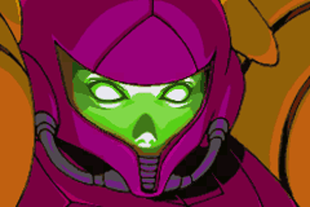
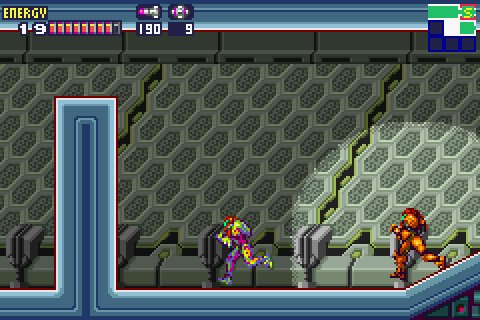
In , this the nature of the SA-X, an X parasite which infects Samus and takes control of her Varia Suit parts. Unlike any other enemy in the game, the SA-X cannot be harmed by Samus in her weakened state. “If you see it, just run”, the computer tells you. The player is utterly powerless in these situations; if you try and attack it you will be chased down until you are killed. The possibility space is suddenly shrunken during these brief encounters. Instead of the multitude of possible attack options one experiences with new enemies, the player is restricted to passivity, having to hide or run from the threat. To return to the emotional response phases described by Jarvinen, the normal chain of responses to new enemies is completely broken. When the player reaches the third stage, action readiness, they must cower in fear, hoping the SA-X won’t see them. These moments are tense, eliciting a physiological response like someone may actually feel during a fight or flight response. This emotion is felt directly by player because their agency is stripped from them. The hunter becomes the hunted in Metroid Fusion which was descisive step into the horror genre.
MadsenKirklandConclusion
The Metroid series may work within the same genre framework of game, but each game has a very different feel because of the way that a player interacts with the formal structure of the game. Metroid feels alien and barren, which is heightened by its lack of map. Super Metroid feels isolated yet explorative due to its clever open-world level design. Metroid Fusion feels uncannily terrifying as you are hunted down by a stronger foe in a more linear narrative experience. Each of these gameplay experiences feel different because of the different ways the formal structure elicits emotional responses from the player. As videogames become more even more immersive, these facets of game design will only be more malleable, allowing for even more unique experiences in play.
Hello world!
Welcome to WordPress. This is your first post. Edit or delete it, then start blogging!
Read more