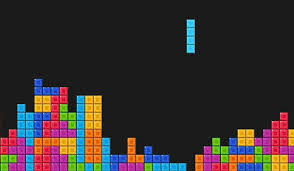
Tetris is a simple puzzle game in which the player must fit falling blocks into the empty spaces made by other blocks. If you are unfamiliar with the game, you can play the computerized version here.
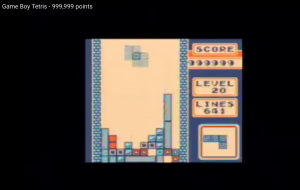
These are screenshots from the YouTube video, Game Boy Tetris – 999,999 points by Spectre255. In this thirty-two minutes of game play, the player achieves 999,999 points (the first time anyone has ever done this).

The player’s ability to see patterns, understand them, and configure the puzzle pieces accordingly shows the application of visual literacy within a technological landscape. Furthermore, his ability to navigate the technology needed to play the game (in this case, a game boy), showcases technological literacy as well.
Undoubtedly, the maturation of these visual and technological literacies have allowed the player to enjoy the game more than he would if he were not as adept.
These literacies have given him the dominance to beat the game.
(Notice the score in both pictures: 999,999).
Huizinga argues in Homo Ludens that play “…creates order, is order. Into an imperfect world and into the confusion of life it brings a temporary, a limited perfected. Play demands order absolute and supreme.” Tetris promotes this order and satisfaction.
