
Nancy Drew: The Ghost of Thornton Hall requires a lot of problem-solving. Among it’s many puzzles, it is also text heavy, prompting the player to rely on conversations and in-game reading. This promotes critical literacy by encouraging the player to actively engage with these readings in order to decipher puzzles and gain understanding of the social situation within the game. Some of these readings are excerpts from diaries, pertinent information from books, or ransom notes. These readings also promote linguistic literacy, as sometimes the player must understand unfamiliar words or language.
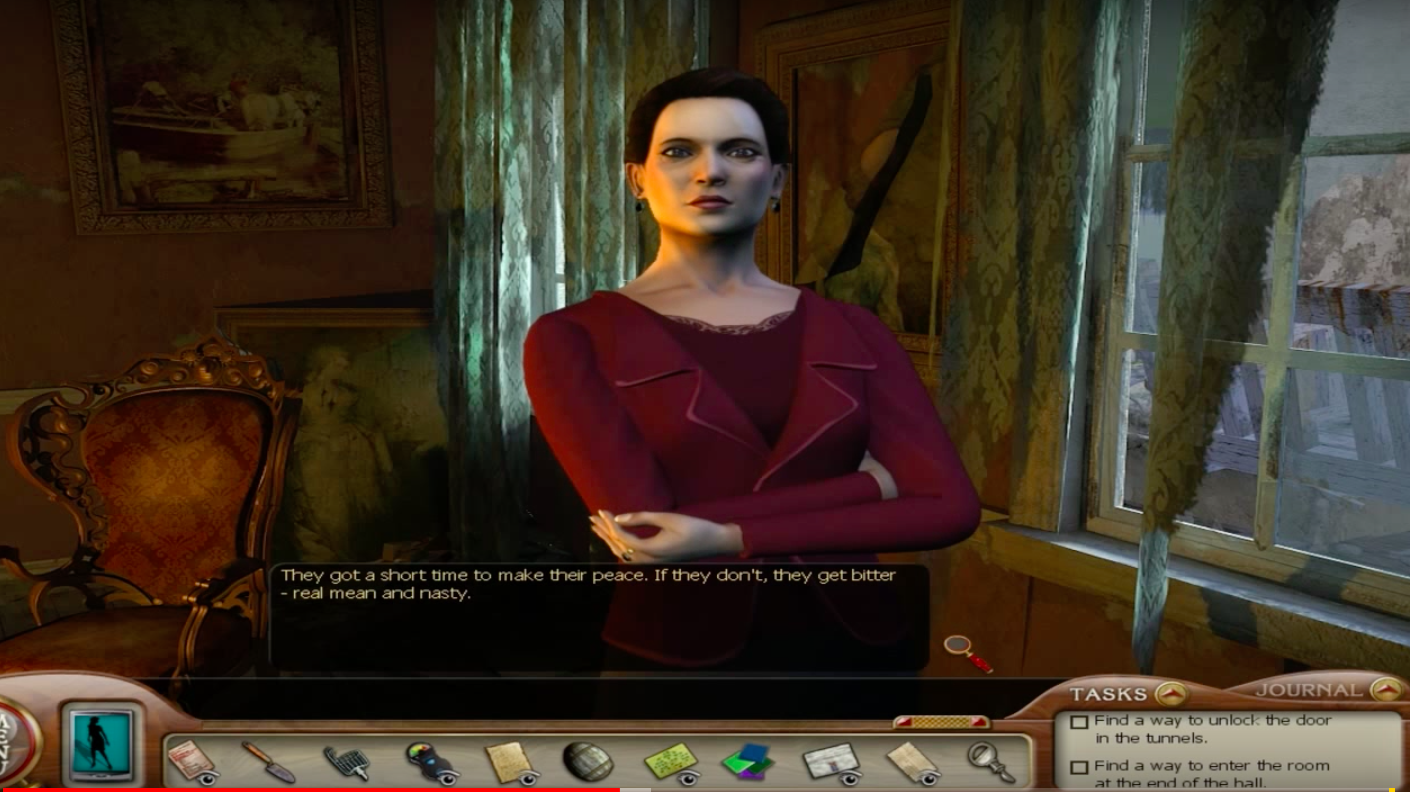
The more adept the player is at thinking critically and understanding unfamiliar linguistic spaces, the quicker the mystery can be solved. Ian Bogost in The Rhetoric of Video Games that “video games make claims about the world, which players can understand, evaluate, and deliberate.” What Nancy Drew claims about our world is that the quicker critical thinking an individual can engage, the faster problems can be solved.
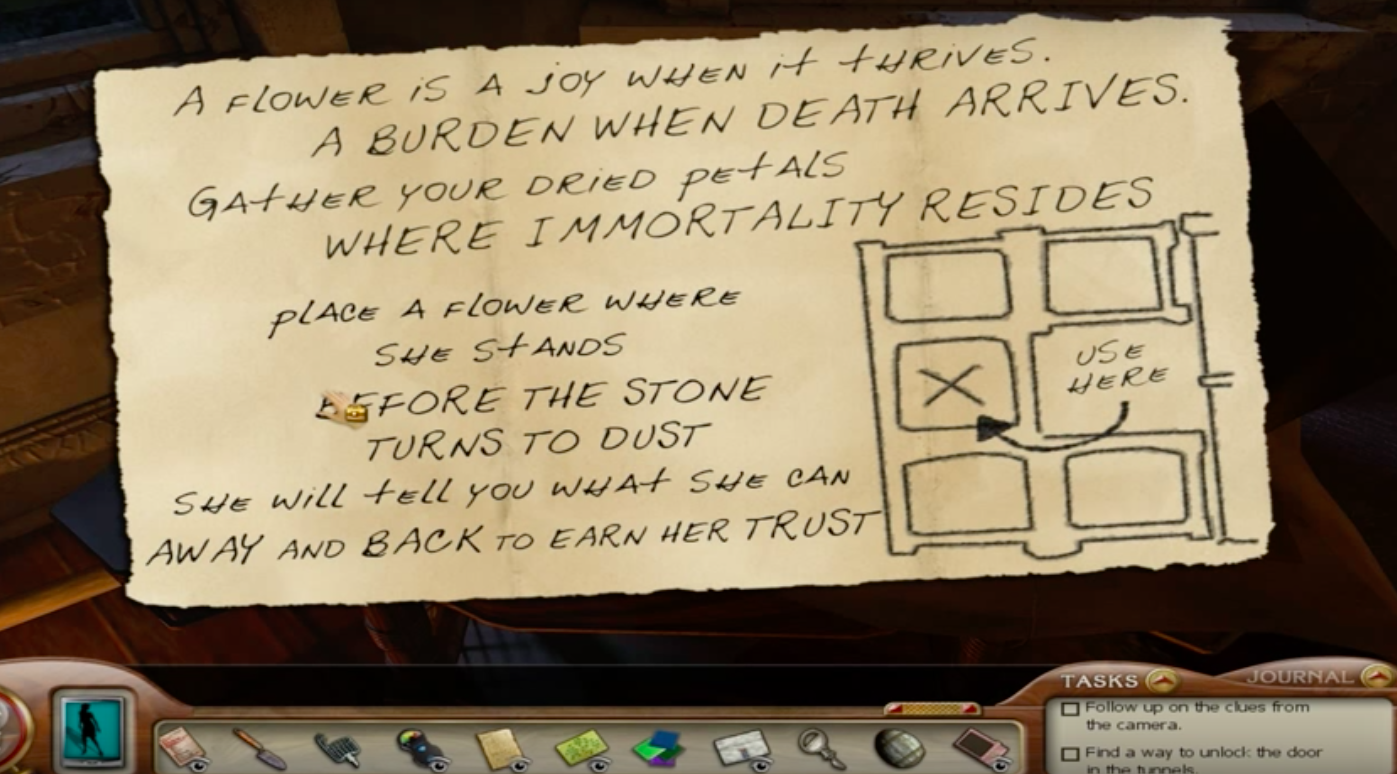
A player’s ability to navigate the technological landscape of the game (which, in this case is only a computer- Mac or PC), understand and engage with the linguistic spaces within the game, and critically think in order to solve puzzles, equips them with the dominance needed to defeat the game.
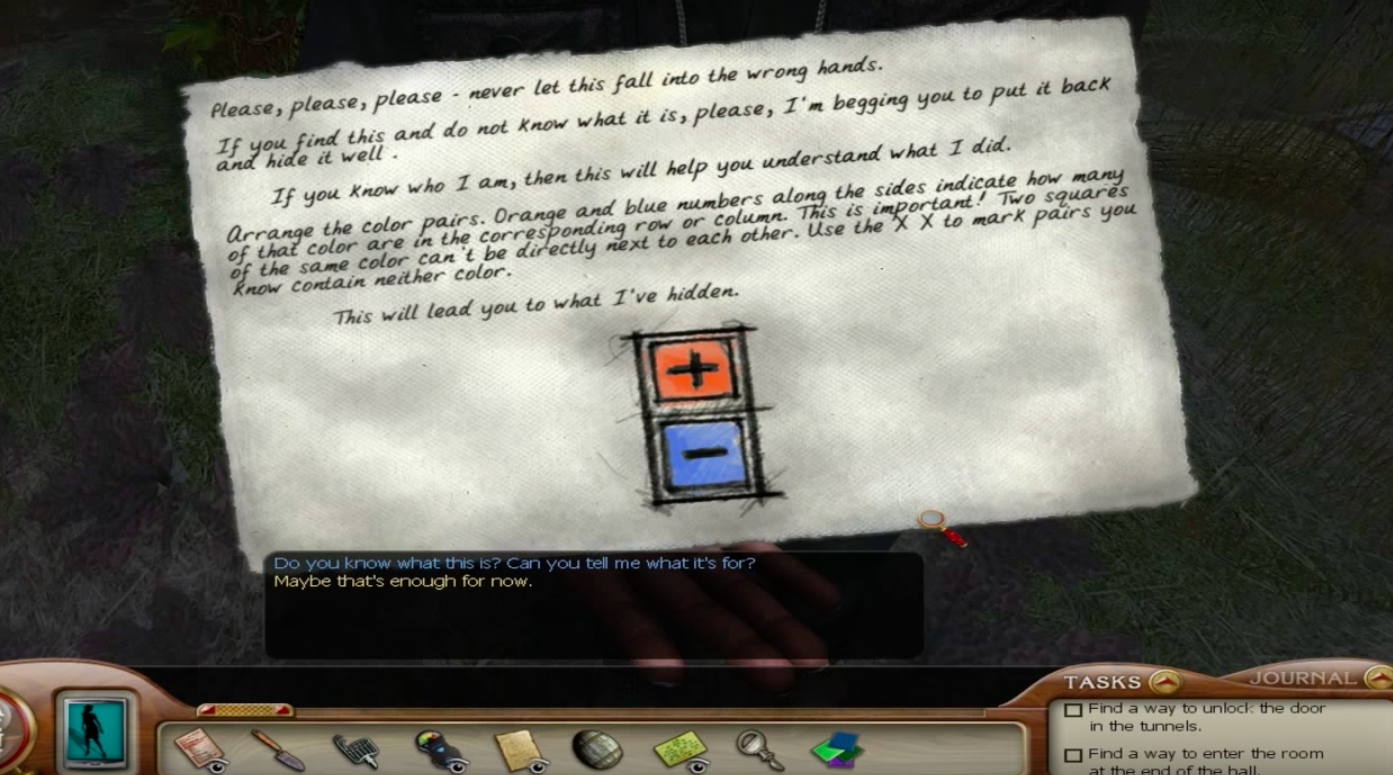
It would be more frustrating to play this game without a significant understanding of these literacies. In fact, the game is almost impossible to beat unless the player has at least some knowledge in these three areas.
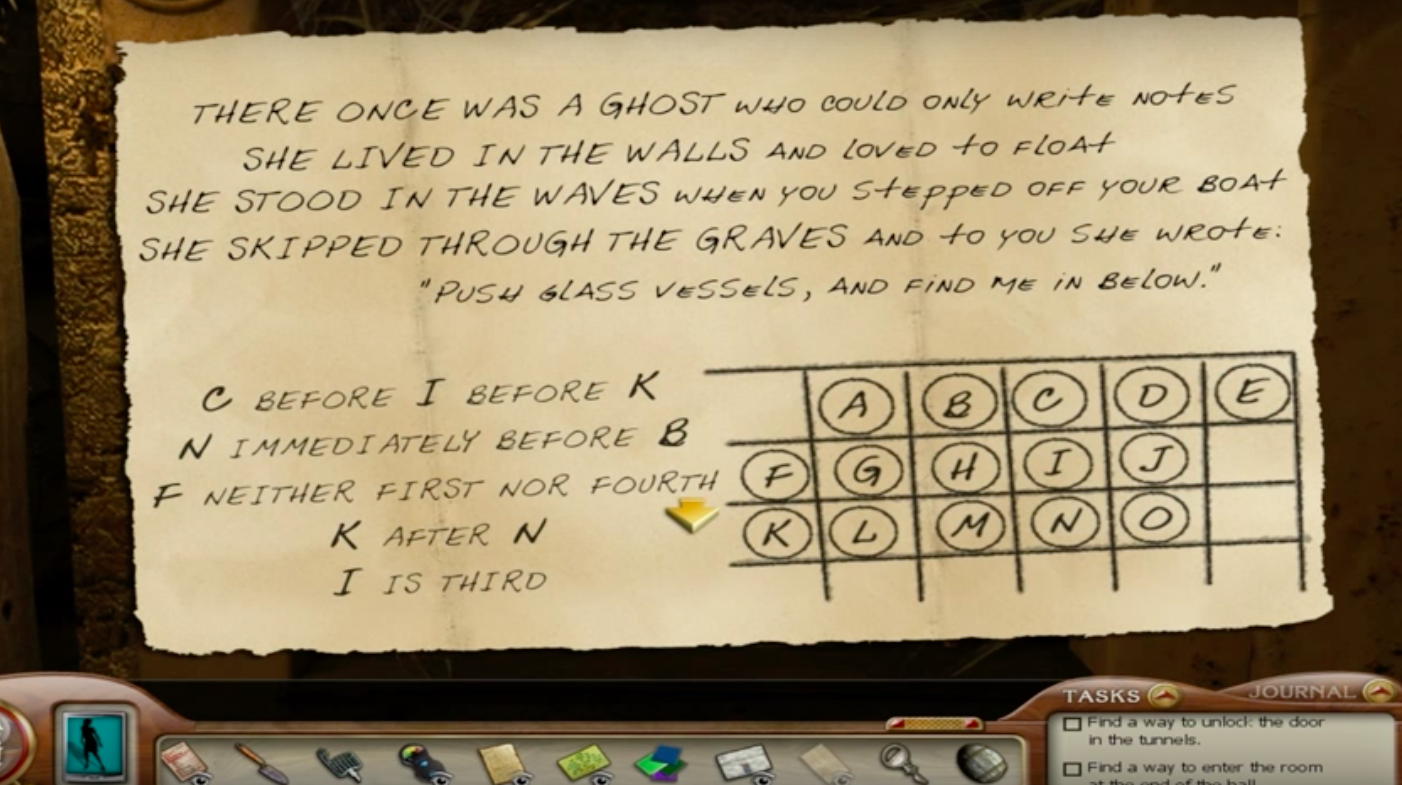
Online walkthroughs are often used to help those who may be struggling within the game.
The point is that if an individual plays these games enough, they will not need to depend on walkthroughs, and can use these literacies in real-life situations as well.
